Technically speaking, Shenmue shouldn’t have quite made this list. I value honesty, so I’ll put that out there before anyone calls me on it. Some people celebrated their best of the decade at the end of 2009. Fair enough. I like round numbers, so I did mine at the end of 2010, where the year ends with a nice zero.
The downside to this is that the year 2000 was 11 years ago. Eleven years is more than a decade. Well, screw it I say, because I’m not going to let a puny couple of months keep me from celebrating this under-appreciated and influential title.
See, some people would have put Grand Theft Auto III in this spot. Truly it would be deserving, as I can’t think of a single game more influential over the last ten years than Rockstar’s first open-world opus. Hell, half the games on this list wouldn’t exist if it weren’t for Grand Theft Auto III.
But this list isn’t the most important or influential games of the past ten years, it’s those that I consider my favorites. My criteria may be subjective, but I happen to think that makes the list more personal and more interesting.
So I’m choosing Shenmue. This forgotten Dreamcast classic did “open-world” before it was cool and paired it with a story that was gripping and epic to boot. It’s a story that was never finished because of poor sales and skyrocketing budgets, and that’s a damn shame, but I don’t think that should overshadow what Shenmue accomplished.
Shenmue was a game before its time. Only later would technology and economics make games of this scale and depth successful on a broader scale, but Sega tried it anyway and forged a path for all to come.
It is time that we, as a unified gaming community, tell Sonic to go the hell away. It is time we realized the madness and false assumptions and clouds of delicious nostalgia that have been screwing with our judgement for far too long. It’s time we came to our damn senses and admitted the truth.
The Sonic formula kind of sucks.
I know. It’s hard. But you have to let go. You know this to be the truth.
So many of us have deeply cherished memories of the Sonic games on the Genesis. So many of us have been clamoring for a return to those golden days ever since the blue hedgehog went 3D and multiplatform and started hanging out with that colorful group of annoying animal friends that just wouldn’t leave us alone no matter how many times we insulted their stupid spiky gloves or told them no one wanted to fish in a goddamned Sonic game you stupid fucking purple cat.
Look, before you go throwing things at the screen in blind rage, I’m not saying the Sonic games weren’t good… for their time. That’s the key isn’t it? What was once brilliant simply no longer works in a modern context.
The Sonic franchise represents a bygone era of design concepts that have become annoying, passe, outdated, and generally shunned by game developers with even the slightest bit of sense. It would be one thing if the Sonic games just made us deal with a few outdated concepts here and there. I think we could probably forgive that in the name of nostalgia and a good time. It’s not that simple, sadly.
See, the Sonic formula is made up almost entirely of game design ideas that have no place on a modern console. The entire design process of these games is pretty much a bunch of developers sitting in a room coming up with as many ways to be complete fucking dicks as they possibly can.
And now for those unfortunate games that just didn't quite cut the mustard. In some alternate universe these could be just as deserving of a slot in the top ten, but for some reason they got left behind. They are grouped here so they can at least get some shot at the recognition they so clearly deserve.
Fallout 3 DLC
The elusive definition of a “good value” in gaming is getting trickier and trickier to define in these times of inevitable downloadable content, dirt cheap iPhone games, and digital distribution that sometimes costs inexplicably as much as a physical product.
I have not lost sight of the fact that the downloadable expansions for Fallout 3 have cost me nearly as much as buying the game new in the first place. This on top of the fact that I paid extra for the Limited/Collector’s/Special/Suckers edition, which is an entirely different maddening variable in the value equation.
I ran across a number of different Dreamcast articles online whilst in the midst of my own recent Dreamcast nostalgia. I thought I'd pass some of them along and share the joy.
Gamasutra posted a fascinating seven-page article entitled "The Rise And Fall Of The Dremcast," which is exactly that. Well worth a read for any Dreamcast fan.
Peter Moore, one of the key executives at Sega during the early days of the Dreamcast, posted his thoughts on the little white console, its impact, and his experiences working at Sega. He provides a very interesting inside perspective.
Giant Bomb did nine of their always entertaining Quick Look videos over notable or entertaining Dreamcast titles in celebration of the anniversary. ChuChu Rocket, Crazy Taxi, Sonic Adventure, Shenmue, Samba de Amigo, Typing of the Dead, Virtua Tennis, and Power Stone 2 are all given a run through. Typing of the Dead is embedded below. You're highly advised to check out the rest in the link above.
Giant Bomb also found this wickedly disturbing ChuChu Rocket commercial. Watch it at your own peril.
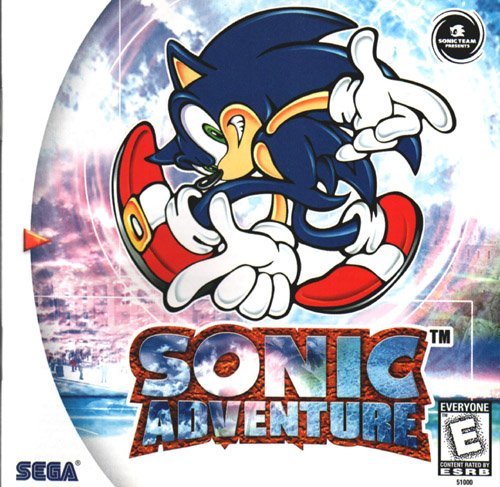
Not every memorable moment in Dreamcast history is a positive one. This cursed title was the warning sign that signaled Sonic’s descent into madness. This should have been the clue that the poor blue mascot was destined to star in countless odes to suckitude in the years to come, one relentless dose of terrible after the next, until there was nearly nothing left of the hedgehog we knew and loved.
All of that doesn’t mean Sonic Adventure wasn’t totally badass at the time, though.
Personally I was too excited by its spectacular jump into 3D-O-Vision at first to really notice its flaws. They took a while to sink in, but sink in they eventually did.
I’ll never forgive it for those damn Knuckles levels.
Curse the repetition. CURSE IT!!!
Before the truth reached my young brain, however, this little clunker managed to worm its way into my fond memories before I knew any better.
The moment I knew that this game was going to be the most awesome thing ever created was when I first saw the trailer, and later the demo, that featured Sonic running down a dock as a whale chased after him, destroying everything in its path.
A freakin’ whale! Sweet!
I felt more sheer anticipation for this game than it deserved by a long shot, waited for it more anxiously and with more innocent excitement than just about anything else I can remember that didn’t have Zelda in the title, but until the horrible truth finally sunk in, it delivered.
The graphics were truly better than anything I had seen before. The sense of speed in Sonic’s levels was truly addicting. The worlds I got to race through and explore were new and exciting. Finally conquering the rest of the game and reaching that glorious point where the cheesy 80s metal that I love so very much for some reason blared and I got to transform into fucking Super Sonic and beat the crap out of the boss put an embarrassingly large smile on my face.
And those little Chaos were just so damn cute.
For a short, wonderful time, Sonic Adventure was glorious.
It’s possible that Sonic Adventure’s failings helped transform me into the jaded creature that now types these nostalgic words. My childhood excitement for the Dreamcast, what it represented, and the unique games I could play with it was eventually betrayed by poor business decisions and a Sega that was losing its grip.
It sure was one hell of a ride, though.
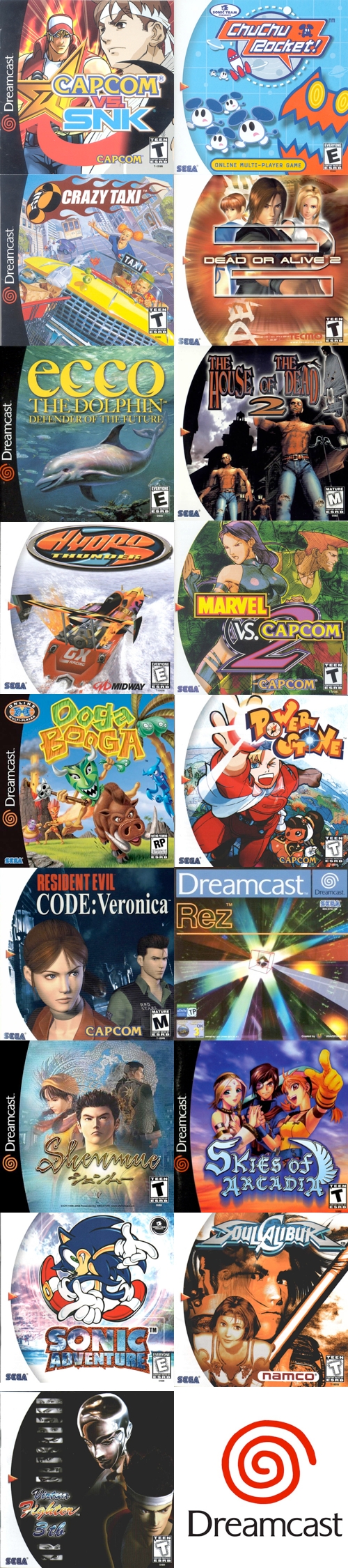
The Dreamcast gave me some of the most radical, unique, and memorable gaming experiences I’ve played to this day. My innocent excitement over Sonic Adventure; my sheer addiction to Crazy Taxi and the love of The Offspring that it spawned; my long-awaited conquering of Grandia II and the ever elusive JRPG genre it represented; my fascination with the enveloping yet insidiously boring world of Shenmue; my time spent playing Jet Grind Radio by myself and with friends and loving the sheer creative spark that radiated from it, not matched by many other games even to this day; all of these are memories I truly cherish.
But the short-lived system soon began to falter. Its popularity wasn’t enough to save Sega from its troubled past. Its utterly unique games didn’t draw the audience necessary to dig it out of the hole it had dug for itself.
The creative spark that had once defined Sega, that had once enthralled a generation of gamers, that had once captured so many hearts and imaginations and developed a strong rivalry with boring old Nintendo, would quickly fade with the Dreamcast’s passing.
The great saga of Shenmue remains unfinished. Sonic Adventure II, along with every Sonic game that followed, was utterly forgettable at best. Crazy Taxi 2 and 3 both sucked. Sega soon devolved into just another publisher of mediocre action games and forgettable sequels, with that oh-so-rare diamond in the rough coming out of nowhere and reminding of what once was.
Without its own console, its own piece of hardware to call home, Sega just couldn’t take the risks it used to. It couldn’t afford to be the company we once loved. The safety net had been taken away and its built-in audience had disappeared, forcing the accountants to take over and move it into that dreadful hell of “play it safe” game development.
Sonic Adventure may have been the death knell of a great company, but I yearn for those troubled days. They were the last of the great ones for Sega, and some of the last for my youthful enthusiasm.
It is true enough that my jaded nature may have come more from age than from any betrayal by Sega, but it is hard for me not to want to pin the blame.
The PlayStation 2 just wasn’t the same; the GameCube not as magical; the Xbox, by comparison, a faceless computer.
The Dreamcast was special.
It was a once-in-a-lifetime culmination of circumstances that could never be recreated, but that offered one of the greatest concentrations of unique titles ever to be seen. It is all too true that some of them, like many things in our memories, do not hold up well when revisited today.



 Mon, January 10, 2011 at 7:14 PM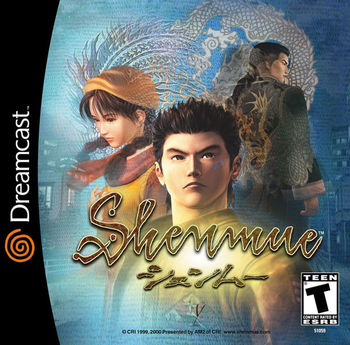
;)